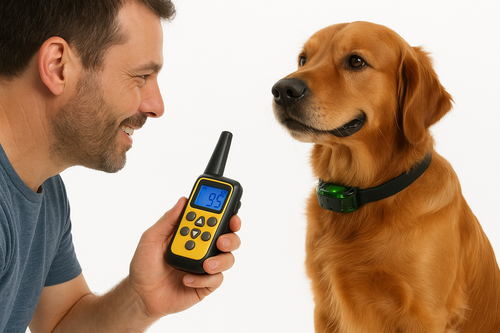

Electric shock collars are banned in Wales. They are not banned anywhere else in the UK. That is the whole legal position in one sentence, and it has not changed since the last time most of the internet wrote about it. This page sets out what the law actually says in each of the four nations, dated, with the source named and linked for every claim, and is correct as of 5 September 2026.
Calmshops sells citronella spray collars and vibration collars. We do not sell static-stimulation or shock collars and we do not recommend them. That is our position, not a legal claim, and we are keeping the two separate on this page — a welfare argument does not need a false legal prop under it, and several pages that used to sit on this site had one.
The law, nation by nation
Wales — banned since 2010
Wales was the first UK nation to act. The Animal Welfare (Electronic Collars) (Wales) Regulations 2010 prohibit three things: attaching an electronic collar to a cat or dog, causing one to be attached, and being responsible for a cat or dog while it is wearing one. This is the only outright prohibition anywhere in the UK, and it has stood since 2010.
England — a ban was made, then withdrawn before it took effect
This is the one most pages get wrong, usually by reporting the plan rather than what actually happened. The Animal Welfare (Electronic Collars) (England) Regulations 2023 were laid before Parliament in April 2023 and approved by the House of Lords that June, with a commencement date of 1 February 2024. They did not come into force. Mark Spencer, then Minister of State at Defra, explained why in a written answer dated 15 February 2024: “Pressing ahead with the Regulations at the start of this year would have left an unacceptably short window for pet owners to adapt their training methods. The Government remains committed to introducing a ban on the use of e-collars. We will pursue new regulations to deliver this commitment on a timeline that is suitable for owners.” No timeline has been published since. There is currently no ban on shock collars in England. Owning or using one is not in itself illegal, though causing an animal unnecessary suffering is an offence under the Animal Welfare Act 2006 regardless of the device used.
Scotland — a ban was proposed, voted on, and defeated
Scotland came closest to a ban outside Wales, and then did not get one. At the final stage of the Welfare of Dogs (Scotland) Bill, on 23 January 2025, MSP Ross Greer moved amendment 18, which would have required anyone acquiring a dog to avoid using any device that applies an electric current to the dog's skin. STV News reported the division as 84 to 28 against the amendment, and the Bill passed the same day. It received Royal Assent on 19 March 2025 as the Welfare of Dogs (Scotland) Act 2025 — a code of practice for acquiring a dog, which does not touch training equipment. There is no ban on shock collars in Scotland. Scottish Government guidance on dog training aids states that it does not condone electronic shock collars, and the general offence of causing unnecessary suffering under the Animal Health and Welfare (Scotland) Act 2006 still applies to their use, as it does to any training method. As of mid-2025 the Scottish Government was running a separate consultation on a possible future ban, with no completion date announced.
Northern Ireland — no ban, and a minister exploring one
There is no ban on shock collars in Northern Ireland. Use is restricted only in the sense that causing an animal unnecessary suffering is an offence under the Welfare of Animals Act (Northern Ireland) 2011 — the same offence-based approach as Scotland, not a prohibition on the device itself. In the Northern Ireland Assembly on 17 June 2024, MLA Steve Aiken asked Minister Andrew Muir whether he planned to ban electric and prong collars. Muir replied: “Although the use of shock collars or e-collars is not banned in Northern Ireland, a person may use an e-collar on an animal only if it does not cause unnecessary suffering,” adding that excessive intensity settings could leave a user “liable for prosecution.” It was a question answered in the Assembly chamber, not a motion or a vote. On a ban, Muir said only that he was keen to explore how one could be achieved, without setting a date.
A note on Ireland
The Republic of Ireland is a different country with its own government, and it does not appear above because this page covers the United Kingdom. It matters here because the Republic banned remotely controlled electric collars in 2024, and search results about Northern Ireland very often surface the Republic's ban instead — they share a border and a great deal of search-engine confusion. If you are in Northern Ireland, the Republic's ban does not apply to you. The position above, for Northern Ireland specifically, is the one that does.
What this means if you already own one
Outside Wales, owning or using a shock collar is not in itself against the law. In every nation, including Wales through its general animal welfare legislation, causing a dog unnecessary suffering is an offence regardless of what device was used to do it. A device set to an intensity that causes distress is where the general law applies even where no device-specific ban exists.
None of this is advice on whether to use one. It is the legal position only. Our view on that is above, and it does not change by nation.
Vibration and spray: the alternatives we actually sell
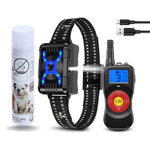
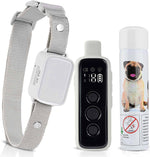
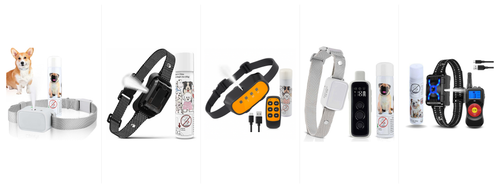
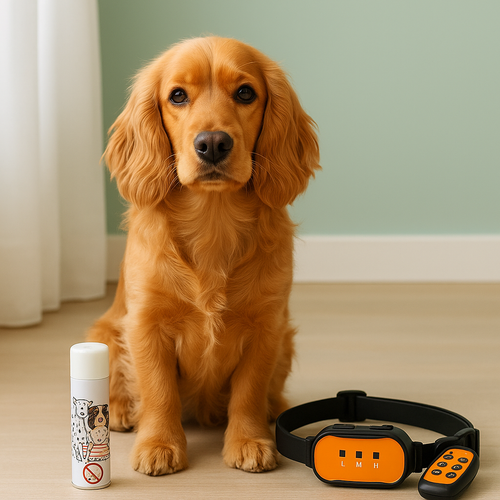
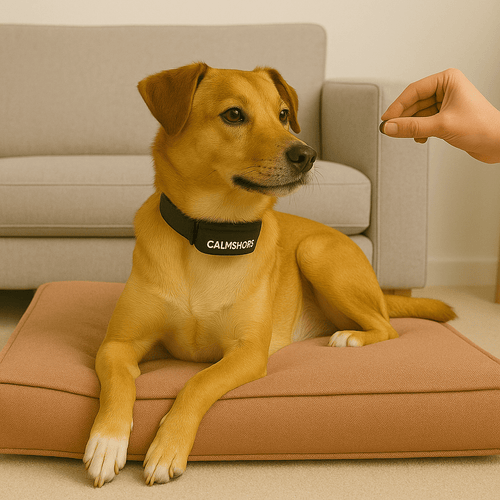
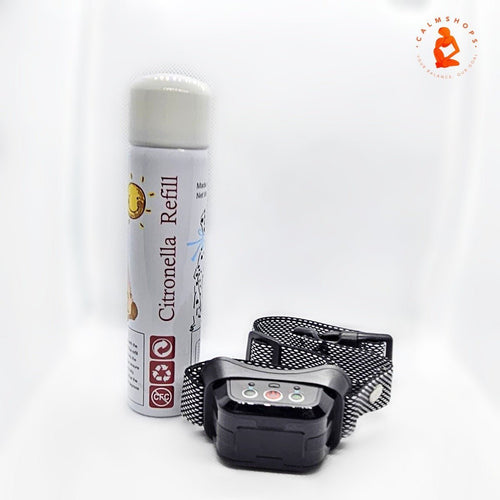
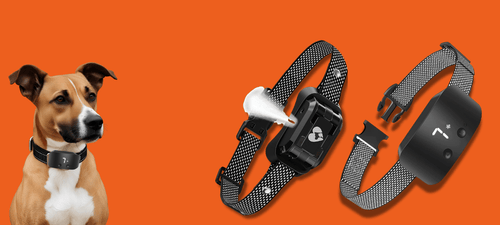
Neither vibration collars nor citronella spray collars are restricted anywhere in the UK. Both work by getting a dog's attention rather than causing pain, and both are what we stock: vibration collars and citronella spray collars. Most of our remote-controlled spray collars are themselves multi-mode devices — spray, vibration, and a warning beep, each independently adjustable — rather than spray-only, so a single collar often covers both approaches; our automatic, sensor-triggered spray collars are spray-only. If you are trying to decide which suits your dog, that is a separate question from the legal one answered here.
Last bark
One nation bans shock collars outright. The other three do not, despite England and Scotland each coming close and stopping short. That is the whole picture, and it is worth checking again before you rely on it — this is exactly the kind of legal position that moves, and pages that stop updating are how contradictory answers end up on one small UK pet retailer's own site.
Frequently Asked Questions
Here are some common questions customers may have about this topic.
Are shock collars illegal in the UK?
Only in Wales, where they have been banned since 2010. England's planned ban was withdrawn before it took effect in 2024 and has not been replaced. Scotland's proposed ban was defeated 84 to 28 at the Scottish Parliament on 23 January 2025. Northern Ireland's Assembly has discussed a ban in an oral question session but has not put one to a vote. Outside Wales, owning or using one is not in itself illegal, though causing a dog unnecessary suffering is an offence everywhere regardless of the device used.
Why do so many websites say shock collars are banned in England?
Because a ban was genuinely planned. The Animal Welfare (Electronic Collars) (England) Regulations 2023 were approved by the House of Lords and had a commencement date of 1 February 2024. The government withdrew them before that date and has not set a new one. Many pages report the plan rather than the withdrawal, which is why the claim persists.
Did Scotland ban shock collars?
No. An amendment to ban them was added to the Welfare of Dogs (Scotland) Bill and put to a vote at its final stage on 23 January 2025. It was defeated 84 to 28, and the Bill passed the same day, receiving Royal Assent on 19 March 2025. The resulting Act covers the code of practice for acquiring a dog and does not restrict training equipment. A separate government consultation on a possible future ban was ongoing as of mid-2025 with no completion date set.
Is a shock collar legal in Northern Ireland?
There is no ban in Northern Ireland, so use is not prohibited, but it is restricted by the general offence of causing unnecessary suffering under the Welfare of Animals Act (Northern Ireland) 2011, the same approach as Scotland. This is separate from the Republic of Ireland, which banned remotely controlled electric collars in 2024; that ban does not apply in Northern Ireland.
Does Calmshops sell shock collars?
No. We sell citronella spray collars and vibration collars, and we do not sell or recommend static-stimulation or shock collars. Neither vibration nor spray collars are restricted anywhere in the UK.