Skip to content


The window. The postman. A leaf. Another dog three gardens over that nobody else can hear. If your dog appears to bark at everything, it can feel like there is no pattern at all — and if the neighbours have started mentioning it, it stops being merely irritating and starts being a problem you have to solve.
There is almost always a pattern. Dogs bark for a handful of distinct reasons, and the reason matters enormously, because what works for one does almost nothing for another. A dog barking to make you look at them needs the opposite response to a dog barking because they are frightened.
So the useful first step is not buying anything. It is working out which kind of barking you actually have.
First, the one that is different from all the others
If your dog barks, howls, paces, drools, scratches at doors or destroys things specifically when left alone — and is settled when you are home — that is separation-related distress, and it is not a training problem. It is a welfare problem. Your dog is panicking.
Nothing in this article will fix it, and no anti-bark device is the answer to it. Adding something unpleasant to a situation a dog already cannot escape tends to make panic worse, not better. This is the point to speak to your vet, who can rule out anything physical and refer you on. What you want is a behaviourist rather than a gadget.
It is worth being sure, because the two look similar from the outside and people get this wrong in both directions. A simple test: point your phone at the room and leave for an hour. Barking at triggers starts and stops with events — a bin lorry, footsteps, a door — and there are quiet stretches in between. Distress barking starts when you leave and does not settle, and you will usually see the pacing and the door-scratching alongside it.
If what you see is the first, read on. If it is the second, close the tab and make the call.
The five reasons dogs bark

1. Alert barking
Something happened and your dog is telling you about it. A knock, a car door, a noise upstairs. This is short, sharp, and stops fairly quickly once the thing has been investigated — unless it gets rewarded by a reaction, in which case it does not.
2. Boundary or territorial barking
The classic window-and-fence routine. Someone approaches, your dog barks, the person walks on, and your dog concludes that barking made them leave. It works every single time, from the dog's point of view, which is precisely why it becomes so entrenched. This is the one most likely to have the neighbours involved.
3. Frustration barking
Something wanted and not available. Another dog across the road on the lead. A squirrel. A ball under the sofa. It tends to be higher-pitched and more insistent, often with jumping or spinning alongside it.
4. Attention barking
Learned, and learned from us. A dog barks, someone looks, speaks, laughs, or gets up. That is the reward. Dogs are excellent at working out what produces a result, and a shout counts as a result.
5. Fear barking
Backing away, hackles up, barking at the thing they want to be further from. This is the one where a correction is most likely to backfire, because you are adding something unpleasant to something already frightening.
Most dogs who "bark at everything" are doing two or three of these in different situations. Watching which one is happening, and where, is worth more than any single technique.
What makes it worse

Three things, all of them things ordinary owners do without noticing.
Shouting back. To your dog, you have joined in. It is noise added to noise, and for an attention barker it is a direct reward. It is the single most common way a barking habit gets reinforced by the person trying to stop it.
Inconsistency. Ignoring it on Monday, laughing on Tuesday, losing your temper on Wednesday. That teaches a dog that barking sometimes works, and intermittent rewards produce the most stubborn habits of all. If everyone in the house is not doing the same thing, nothing else you try will hold.
Rehearsal. Every unchallenged bark at the window is a repetition, and repetition is practice. A dog who barks at passers-by forty times a day is not failing to learn — they are learning very efficiently, just not what you had in mind.
Management before equipment
Most barking improves noticeably from changes that cost nothing, and these are worth exhausting first.
Block the sightline. If the barking happens at a window, the cheapest fix in this entire article is stopping your dog from seeing out of it. Frosted film on the lower half of the glass, a piece of furniture moved, the front room closed off during the day. You cannot rehearse a behaviour you cannot see the trigger for, and this alone resolves a great deal of boundary barking.
Sort the routine. Predictable days settle dogs. Meals, walks and rest at roughly consistent times give a dog less to be vigilant about, and vigilance is the state that barking comes out of.
Check the exercise, and the kind of it. An under-exercised dog barks more, but so does a dog getting an hour of ball-throwing and nothing else — that winds some dogs up rather than settling them. Sniffing walks, chewing and scatter-feeding tend to do more for settling than sprinting does.
Give them somewhere to be. A settled dog needs a place to settle in. Building a calm crate routine, or simply a bed in a quiet corner that is genuinely theirs and never used as punishment, gives you somewhere to send them instead of the window.
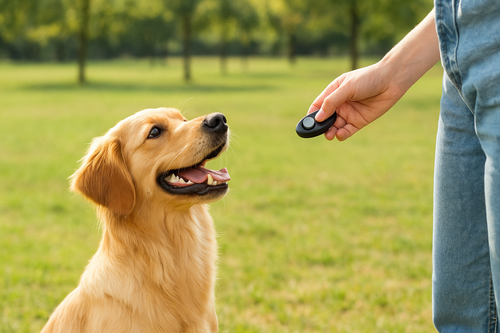
Teach an alternative. The most effective piece of training here is not "stop barking" but "do this instead". Go to your mat. Come to me. Find the treat I have just scattered. A dog cannot bark at the window and be on their bed at the same time, and rewarding the alternative works far better than punishing the bark.
Where equipment comes in, if it does

Sometimes the management and the training are in place, everyone in the house is consistent, and the barking is still happening — particularly when nobody is in the room to redirect it. That is the point at which people start looking at anti-bark collars, and it is a reasonable point to look.
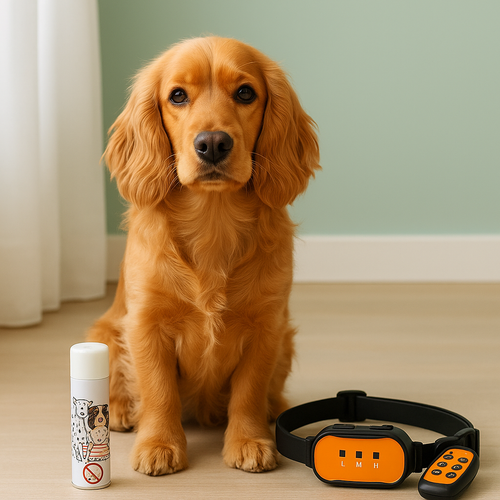
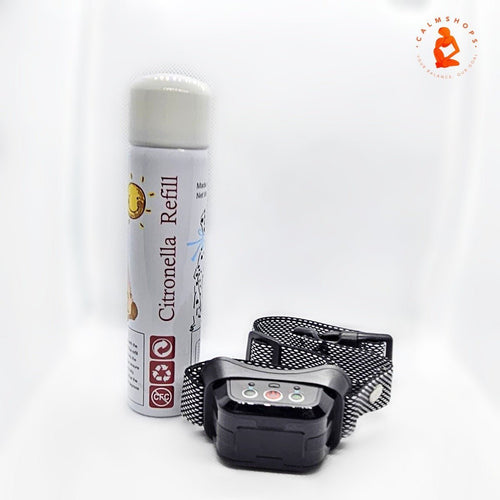
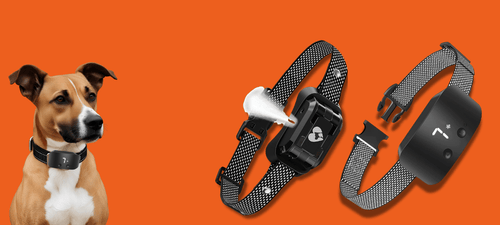
They are interruption tools rather than solutions, they belong alongside training rather than instead of it, and they are not appropriate for fear barking or for a dog in distress. If you get that far, it is worth understanding how a citronella spray collar actually works before you buy one, because the differences between types matter more than the marketing suggests.
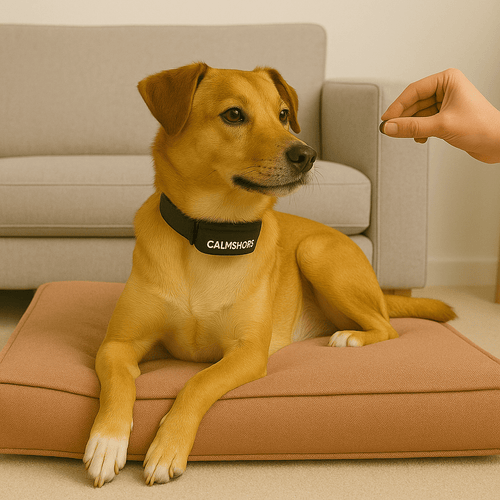
Calming supplements sit in a similar place — they may support a dog who is generally wound up, they do nothing about a specific learned habit, and responses vary a great deal between individual dogs. We have written honestly elsewhere about whether a calming chew has any part to play, including where the evidence is thin. Anything of that kind is a complementary feed rather than a veterinary medicine, and it is not a substitute for advice from your vet or a qualified behaviour professional.
But none of that is the first move, and a shop telling you otherwise is selling rather than helping.
Last bark
Work out which barking you have before you try to fix it. Stop shouting back. Get everyone in the house doing the same thing. Block the window. Give your dog somewhere to be and something to do instead. Most people who do those five things find the problem is a good deal smaller than it was.
And if your dog is barking because being alone frightens them, none of this applies and the sooner you speak to someone qualified, the better it will go.
Frequently Asked Questions
Here are some common questions customers may have about this topic.
Why does my dog bark at everything?
Dogs bark for a handful of distinct reasons: alerting you to something, defending a boundary such as a window or fence, frustration at something they want and cannot reach, seeking attention, and fear. Most dogs that appear to bark at everything are doing two or three of these in different situations. Identifying which one is happening matters, because the response that helps one does very little for another.
How can I tell if my dog is barking from distress at being left alone?
Point a phone camera at the room and leave for an hour. Barking at triggers starts and stops with events such as a delivery or footsteps, with quiet stretches in between. Distress barking starts when you leave and does not settle, and usually comes with pacing, drooling, scratching at doors or destruction. Distress at being left is a welfare problem rather than a training one and needs your vet or a qualified behaviourist, not an anti-bark device.
Does shouting at a barking dog help?
No, and it commonly makes things worse. From the dog's point of view you have joined in, and for a dog barking to get attention a raised voice is a direct reward. Inconsistency has a similar effect: ignoring barking one day and reacting the next teaches a dog that barking sometimes works, and intermittently rewarded habits are the hardest to shift.
What can I do about a dog that barks at the window?
Block the sightline. Frosted film on the lower half of the glass, furniture moved across, or simply closing that room off during the day all stop the behaviour being rehearsed, and rehearsal is what entrenches it. Pair that with teaching an alternative behaviour, such as going to a mat or coming to you, since a dog cannot bark at the window and be settled on their bed at the same time.
Should I use an anti-bark collar?
Not as a first step. Management and training come first, and most barking improves noticeably from blocking sightlines, a predictable routine, appropriate exercise and teaching an alternative behaviour. An anti-bark collar is an interruption tool that belongs alongside training rather than instead of it, and it is not appropriate for a fearful dog or for one distressed at being left alone.