Skip to content


To stop dog barking at night, start by working out why your dog is barking: a noise outside, a need for the toilet, a health problem, a learned bid for attention, or worry about being on their own. Most night barking settles with a vet check where needed, a steady bedtime routine, a quieter sleeping spot and not rewarding the noise. If your dog barks because they are alone or frightened, that is distress, and the right next step is your vet or a qualified behaviourist, not a collar.
We run Calmshops as a small family shop in Oxfordshire. We sell bark collars, so I'll be straight with you about where they fit at night (a narrow job, late in the list) and where they don't fit at all.

Why is my dog barking at night?
The UK charity Woodgreen sums it up well: night-time barking can have several causes, including hearing noises outside, needing the toilet, or anxiety. The cause decides the fix, so it is worth a few nights of watching before you change anything. A phone or pet camera pointed at your dog's bed can show you what happens just before the barking starts.
| What you notice | Likely reason | Where to start |
|---|---|---|
| A new habit, an older dog, pacing or restlessness | A medical reason, toilet needs or age-related change | Vet check first |
| Barking only when you leave the room or go to bed, with whining, scratching or chewing at doors | Distress at being alone | Vet or qualified behaviourist. No collar |
| A new puppy crying in the first weeks | New home, toilet needs, missing company | Crate near your bed, quiet toilet trips |
| Sudden bursts at foxes, cars, footsteps or other dogs | Alert barking at noises | Block sound and sight, routine, reward-based training |
| Barking that stops the moment you appear | Learned attention-seeking | Stop rewarding the noise; reward quiet |
If your dog barks at lots of things during the day too, our guide to why some dogs bark at everything goes through the triggers in more detail.
Could night barking be a health problem?
Yes, and it is the first thing to rule out when the barking is new. Woodgreen says that if an older dog suddenly starts barking at night, it can be a sign of canine cognitive dysfunction, so it's worth a vet visit. Needing the toilet is on Woodgreen's list of causes too, and if the reason is physical, training alone won't fix it.
In older dogs, the PDSA lists not sleeping at night, pacing and barking more among the signs of cognitive dysfunction (often called dog dementia), and advises contacting your vet if you've noticed changes in your dog's behaviour. Please don't put a bark collar on a dog whose night barking might be pain or confusion.
Is your dog barking because they are alone at night?
If your dog sleeps in another room and barks, howls or scratches at the door as soon as you go to bed, they may be distressed at being separated from you. Woodgreen notes that dogs who bark when left alone are often distressed by separation, and Dogs Trust points out that ignoring the barking and returning once it stops doesn't change the way they feel about being on their own.
This is the one situation where I'd ask you not to buy anything from us as the answer. A spray or vibration collar adds something unpleasant to a situation your dog already finds hard and cannot escape. Speak to your vet, who can check for health causes and refer you to a qualified behaviourist for a proper plan. That applies even if your dog is only in the next room: if you can't tell whether it's noise or being apart from you, treat it as distress. In the meantime, ask your vet or behaviourist whether letting your dog sleep closer to you would help.
How do I settle a new puppy who cries at night?
Puppy crying in the first weeks is different from an adult dog's barking, and the advice is different too. Woodgreen's puppy guide says to place the crate right next to your bed for at least the first few nights, and reminds owners that young puppies physically cannot hold their bladder all night.
- Don't ignore a crying puppy. Check whether they need the toilet; if not, Woodgreen suggests placing your hand near the crate or giving a gentle stroke.
- Keep night toilet trips dull: no lights, no play, no fuss, straight back to bed.
- Give the last meal at least three hours before bed and start winding down about 30 minutes before sleep.
Bark collars are not for puppies. Our Auto Citronella Bark Collar, for example, is only for dogs aged 6 months and over.
How do I stop my dog barking at night at noises outside?
For a dog who barks at foxes, cars or footsteps, the aim is less to hear and less to see. Woodgreen suggests you pull the curtains shut and leave the TV or radio on to drown out any external sounds.
- Move the bed away from front windows, doors and shared walls.
- Close curtains or blinds so passing lights and movement are hidden.
- Use a crate cover or a quieter room if your dog is happy there.
Then work on the trigger itself in the daytime. Battersea suggests you record the sound that triggers the reaction, play it very quietly while your dog is calm, reward them for staying quiet, and raise the volume gradually over several sessions. If your dog barks, stop the session and try again the next day with the volume slightly lower.
What bedtime routine helps a dog settle?
A predictable evening gives your dog fewer surprises at bedtime. This is the routine I'd suggest for most adult dogs:
- Enough exercise and brain work earlier in the day: walks, sniffing games, puzzle feeders or short training sessions.
- A calmer last hour: a chew or a quiet game rather than rough play.
- A final toilet trip just before bed.
- Bed in the same place at the same time each night.
For older dogs who are restless at night, the PDSA suggests encouraging them to stay awake for some time during the day, alongside your vet's advice.

How do I avoid rewarding my dog for barking at night?
This applies to adult dogs who have learned that barking brings you downstairs, not to puppies or dogs in distress. Battersea warns that giving your dog attention when they bark will actually encourage the behaviour, and shouting counts as attention.
- For barking that is clearly a demand for attention, Woodgreen's advice is to ignore it completely: no eye contact, no speaking, no touching.
- Reward quiet: praise or a treat when your dog settles on their own.
- Be consistent. Dogs Trust notes that giving in even once is likely to teach them to persist.
- Never punish barking. Woodgreen's view is that this will only make matters worse.
If ignoring makes the barking turn frantic, stop and treat it as possible distress rather than attention-seeking.

Do calming treats or calming collars help with night barking?
They can be part of a wind-down routine, but they are not a fix for barking on their own, and they are not the answer for a dog who is distressed at night.
Our Calmdogs® Dog Calming Treats are a turkey-flavoured soft chew and a complementary feed designed to support calm, relaxed behaviour. They contain chamomile, passionflower, L-theanine and a blend of valerian root and L-tryptophan. Neither melatonin nor CBD is on the ingredient list. The Calmdogs Calming Collar is a pheromone collar that may help some dogs settle more easily, for example in a new home; results vary from dog to dog. Neither is a medicine, and if your dog shows ongoing signs of distress, please see your vet first.
Should I use an anti-bark collar to stop dog barking at night?
Only for one kind of barking, and only after the steps above. A collar is a possible extra for a healthy adult dog who barks at noises outside, once you have blocked the sound, sorted the routine and practised rewarding quiet. It is not for puppies, older dogs with new night barking, or any dog barking because they are alone or frightened.
I also want to be honest about how vets and trainers see these collars. The British Veterinary Association includes anti-bark collars that use noise, vibration, ultrasonic sound or a spray of water or citronella among the aversive methods it says have the potential to cause suffering, and it recommends reward-based training. The BSAVA recommends against aversive methods, names spray collars among them and gives a vibration triggered by barking as an example of punishment, and the Animal Behaviour and Training Council lists automatically triggered spray collars as aversive equipment. A collar interrupts a bark that is already happening. It does not teach your dog what to do instead, so reward-based training has to come first.
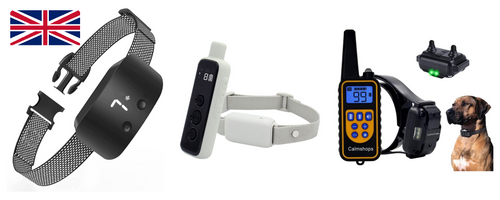
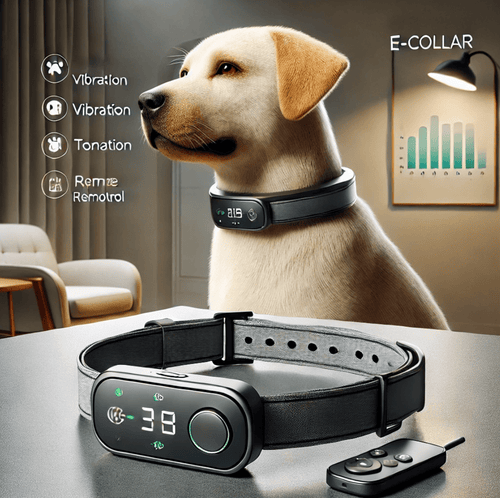
If you do decide on one, these are three automatic (no remote) collars we sell. None of them uses shock.
| Collar | How it responds | Worth knowing at night |
|---|---|---|
| Automatic Bark Collar | Beep or vibration; first bark is a warning only | Reads the vibration of your dog's own bark at the throat, so a dog barking next door is much less likely to set it off than with a sound-only collar. Pauses for two minutes after seven triggers in a minute. Not for use while you're asleep (see below) |
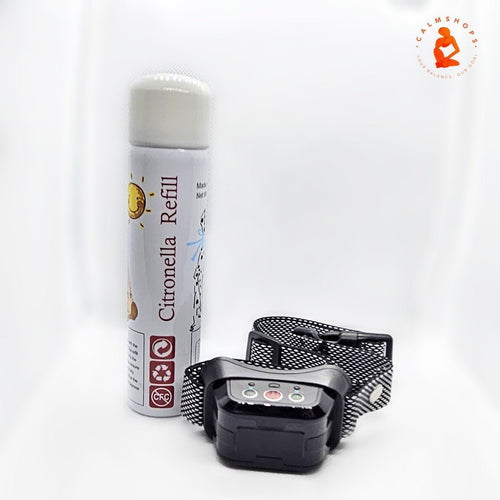
| Auto Citronella Bark Collar | Sound, vibration or spray modes; sensitivity 1–5 | Sound warning first, spray on the second bark. Around 25 sprays per fill. Dogs 6 months+ and 8 lbs+. Not for use while you're asleep (see below) |
| Deluxe Automatic Spray Collar | Citronella spray | Reads bark sound and throat vibration. Battery up to 60 days. Check the spray level every few days. The only one of the three whose product page covers use when you can't actively supervise |

A few rules if you try one:
- Use it first during the day or evening, while you're awake and can watch how your dog reacts. Start on the lowest sensitivity.
- Don't leave the Automatic Bark Collar or the Auto Citronella Bark Collar on your dog while you're asleep. Their product pages don't cover unsupervised use, so we don't suggest it.
- The Deluxe Automatic Spray Collar's page does cover periods when you can't actively supervise, but not as an all-day fixture. If you use it overnight for noise barking, keep continuous wear under 12 hours and give your dog regular breaks.
- Never use any collar for a dog who barks because they are apart from you, alone in the house or frightened.
- Check your dog's neck regularly for rubbing or soreness. Stop if your dog seems worried, won't settle, or the barking gets worse, and speak to your vet or a behaviourist.
On the law: Wales prohibits fitting a collar designed to administer an electric shock (we don't sell those), and spray, vibration and tone collars fall outside that definition. There is no ban in force in England, Scotland or Northern Ireland. Our posts on whether vibrating collars are banned in the UK and whether electric shock collars are legal in the UK cover the detail. For more on how the collars themselves work, see automatic anti-bark collars explained and our look at citronella bark collars.
When should I get professional help?
Speak to your vet if:
- the night barking is new, or your dog is older;
- it comes with pacing, panting, whining, scratching at doors or chewing;
- it happens when your dog is separated from you;
- it carries on despite a few weeks of consistent routine and training.
Battersea's advice is that if tips aren't working, speak to your vet who can recommend a qualified behaviourist. For barking during the day as well, our guide to stopping dog barking with training goes further.
Quick recap
| Step | Why it helps |
|---|---|
| Vet check for new or late-life barking | Rules out medical reasons, toilet needs and age-related change |
| Vet or behaviourist for barking when alone | Separation distress needs a plan, not equipment |
| Crate by your bed for a new puppy | Puppies settle better with you close by |
| Curtains closed, TV or radio on | Masks the outside noises that set off alert barking |
| Steady evening routine | Exercise, wind-down and a last toilet trip before bed |
| Reward quiet, not barking | Stops attention-seeking barking paying off |
| Anti-bark collar, last and only for noise barking | Can help interrupt alert barking in a healthy adult dog; the BVA, BSAVA and ABTC regard these collars as aversive |
Frequently asked questions
Why has my dog suddenly started barking at night?
A sudden change is worth a vet check first. New night barking can come from needing the toilet, a medical reason, or age-related changes such as cognitive dysfunction in older dogs. If your vet finds nothing, look at what has changed at home: a new noise outside, a different sleeping spot, or a change in your routine can all start a new barking habit.
Should I ignore my dog barking at night?
Only if you are sure it is attention-seeking in a healthy adult dog. In that case give no eye contact, no speaking and no touching while they bark, and reward quiet. Do not ignore a crying puppy, who may need the toilet, or a dog who seems distressed at being apart from you. Ignoring does not change how a dog feels about being alone.
Can I use a bark collar for a dog who barks when left alone at night?
No. A dog who barks because they are separated from you is usually distressed, and a spray or vibration collar adds something unpleasant to a situation they cannot escape. Speak to your vet, who can rule out health causes and refer you to a qualified behaviourist. If you can't tell whether it is noise or being apart from you, treat it as distress.
Is it OK for my dog to wear an anti-bark collar overnight?
For most of our collars, no. The Automatic Bark Collar and Auto Citronella Bark Collar pages don't cover use while you're asleep. The Deluxe Automatic Spray Collar page covers times you can't actively supervise, so it is the only one to consider, and only for a healthy adult dog barking at outside noises. Trial it while you're awake first and keep continuous wear under 12 hours.
Should I leave the TV or radio on for my dog at night?
It can help a dog who barks at noises outside. Woodgreen suggests pulling the curtains shut and leaving the TV or radio on to drown out external sounds that may set your dog off. It will not help a dog who barks because they need the toilet, are unwell, or are distressed at being apart from you.