Ir directamente al contenido


Glucosamine, chondroitin and MSM turn up on almost every dog joint supplement on the shelf, usually in that order and usually without much explanation. The short version: glucosamine and chondroitin are building blocks that occur naturally in cartilage, MSM is a sulphur-containing compound, and all three are fed as nutritional support for normal joint function — not as treatments for joint disease.
That distinction is the whole ballgame, and it is where most marketing in this category goes wrong. This piece explains what each ingredient is, how strong the evidence actually is (weaker than the packaging suggests), why the sourcing and the dose per chew matter more than the size of the tub, and what a supplement cannot do.
We sell one of these products — Calmdogs® Active Hip & Joint Chews, a complementary feed containing glucosamine, chondroitin and MSM. You will find it discussed below, including the parts of it that will not suit every dog.
First, the thing that matters more than any of this

For a dog carrying extra weight, losing weight will do more for their joints than any supplement on the market. This is not a throwaway line and it is not us being modest.
A long-running study of 48 paired Labradors, fed either normally or on 25% fewer calories for life, found the restricted group reached a median age of 12 years before radiographic hip osteoarthritis was first diagnosed, against 6 years in the control group. By 14, half the restricted dogs showed changes, compared with 83% of the controls (Smith et al., JAVMA, 2006, 229(5):690–699).
And for a dog that is already overweight and already stiff, the numbers are encouragingly small. A study of obese dogs with osteoarthritis found measurable improvement in lameness from around 6.1% body-weight loss onwards (Marshall et al., Veterinary Research Communications, 2010, 34(3):241–253). For a 30 kg dog that is under 2 kg.
Those are two controlled studies with clear results. We cannot point you to anything comparable for a joint supplement. If you only do one thing, do that one.
What is glucosamine, and what does it do for dogs?

Glucosamine is an amino sugar. Dogs make it themselves, and it is one of the raw materials the body uses to build glycosaminoglycans — the compounds that give cartilage its structure and help hold water in it. The theory behind supplementing it is straightforward: supply more of the building block and support the tissue that uses it.
Two forms are common. Glucosamine hydrochloride, which is what our chews contain, and glucosamine sulphate. There is no settled consensus that either is clearly better for dogs.
Where it comes from matters. Most glucosamine on the market, including ours, is derived from shellfish — usually crustacean shell. If your dog has a known shellfish sensitivity, that is a genuine reason to check the label rather than assume. Vegetarian, fermentation-derived glucosamine does exist, but it is uncommon and usually more expensive. Very few brands say which they use anywhere you can find it. Ours is shellfish-derived, and it says so above.
What is chondroitin?
Chondroitin sulphate is one of those glycosaminoglycans glucosamine helps build. In cartilage it contributes to the tissue's ability to retain water and resist compression. It is almost always paired with glucosamine in supplements, partly on the reasoning that they act on the same system, and partly because that combination is simply what the market settled on decades ago.
Sourcing again: chondroitin is animal-derived, commonly from bovine trachea, shark cartilage or porcine sources. Ours is porcine. That is worth stating plainly, because for some households — on religious or dietary grounds — it is a decisive piece of information, and it is almost never disclosed. If it matters to you, it should not take three emails to find out.
What is MSM?
MSM — methylsulfonylmethane — is an organosulphur compound. Sulphur is a component of connective tissue, and MSM is included in joint formulations as a dietary source of it. It is the most recent of the three to become standard in this category.
We are not going to rank it against glucosamine and chondroitin, because we do not have the evidence to do that. What we can tell you is that the systematic review quoted further down did not assess MSM at all, and that we are not aware of comparable work we could point you to for it in dogs. That is an absence of evidence rather than a verdict either way, and it is the honest thing to say about it.
And the vitamins C and E?
Both are antioxidants. Vitamin C also has a role in normal collagen formation. In a joint supplement they are supporting nutrients rather than the reason anyone buys the product, and any brand presenting them as the headline is padding. Ours contains 71.43 mg of vitamin C and 14.29 mg of vitamin E per chew, and we would not ask you to buy it for those. If you are working out which vitamins and supplements a dog actually needs, that is a broader question than joints, and the answer for most healthy dogs on a complete diet is: fewer than the shelf suggests.
So how good is the evidence?

Weaker than the category likes to admit, and we would rather show you the source than ask you to take our word for it.
The most thorough recent look at this is a systematic review and meta-analysis published in the International Journal of Molecular Sciences in 2022, which pulled together 57 articles covering 72 trials of enriched diets and nutraceuticals in dogs and cats with osteoarthritis. On glucosamine and chondroitin its finding was blunt: the authors reported "a very marked non-effect of chondroitin-glucosamine nutraceuticals" and concluded that "the latter products should no longer be recommended for pain management in canine and feline osteoarthritis" (Barbeau-Grégoire et al., Int J Mol Sci, 2022, 23(18):10384).
That is a sentence with our own product's two headline ingredients in it, on our own blog, and we have thought about whether to include it. We are including it because it is the current state of the evidence and you would find it eventually anyway.
Two things are worth saying alongside it, in fairness rather than in defence.
The first is that the review is about pain management in diagnosed osteoarthritis — treating an established painful joint. That is not a claim a complementary feed is permitted to make in the UK in any case. Nutritional support for normal joint function in an adult or senior dog is a different and more modest proposition, and it is the only one we make.
The second is that the same analysis found clear benefit elsewhere: it reported "evident clinical analgesic efficacy for omega-3-enriched diets". Of the ingredients that review assessed, omega-3 has the best support — and it is not in our tub. Weight management, as above, is better evidenced still.
One limit on that citation, since precision matters here: the review did not assess MSM as a separate category. So it tells you nothing about MSM in either direction, and we have not treated it as though it does.
What all of that means practically: these ingredients are widely used, generally well tolerated, and fed as nutritional support for normal joint function. Treating them as a likely fix for a painful joint is a mistake, and treating them as a substitute for seeing a vet is a worse one.
Why dose per chew matters more than the size of the tub

This is the single most useful thing to take away, and it is really just how to read a supplement label — the same skill we set out in our guide to reading a calming chew label. Tub size is marketing. Milligrams per chew, multiplied by the number of chews your dog's weight band calls for, is the actual product.
A tub of 120 chews at 250 mg of glucosamine each is a different proposition from a tub of 120 at 100 mg, even though the front of the pack looks near identical. Work out what a day costs, not what a tub costs.
Ours is £12.95 for 120 chews, which is 10.8p a chew, and the feeding guide gives one chew a day up to 25 lbs (11 kg), two from 26–75 lbs (12–34 kg) and three above that. So a small dog costs about 11p a day and a tub lasts four months; a medium dog is about 22p and two months; a large dog is about 32p and forty days. Whichever band your dog falls into, that is the number to compare against anything else you are looking at — and check the competing product's milligrams per chew, not just its price.
Two other label habits worth having. Look for feeding banded by body weight rather than a single scoop-for-all instruction. And check the flavour base against your own dog, which brings us to something we need to be direct about.
The chicken-and-duck problem
Our hip and joint chews are chicken and duck flavoured. The inactive ingredients include chicken, duck digest, duck fat and natural chicken flavouring.
If your dog has a chicken sensitivity, this is not the product for them. We are saying that clearly because our calming chews are turkey-based, and we have written elsewhere on this blog that they suit a good number of chicken-sensitive dogs. That is true of the calming chews and it is not true of these. Different product, different base. Please do not carry one across to the other.
What a joint supplement cannot do
It cannot reverse joint damage that has already happened. Cartilage loss and the bony changes of osteoarthritis are not undone by a chew, and any product implying otherwise is misleading you.
It is also not a diagnosis. If your dog is limping, yelping, holding a leg up, or went from fine to not-fine over a few days, that needs a vet rather than a supplement — cruciate injuries, hip dysplasia, and a number of other orthopaedic problems present as "slowing down" until someone examines the dog. Veterinary orthopaedic assessment is what tells you which of those you are dealing with.
Arthritis in particular is a veterinary diagnosis and needs veterinary management. Pain relief, weight planning, exercise modification and monitoring are your vet's territory. A complementary feed sits alongside all of that. It never replaces it.
How long before you would expect to see anything?
Feeding guides in this category, ours included, typically suggest allowing several weeks rather than days, so plan on giving one a fair run — something in the order of six to eight weeks — before forming a view. Two caveats, though. Mobility varies a lot with weather, activity and how the previous day went, so a single good week is not evidence of much. And if you changed the food, the walks and the supplement in the same fortnight, you will not know which one did anything.
Where our chews fit

Calmdogs® Active Hip & Joint Chews are a complementary feed, in a 2.5 g soft chew, 120 to a tub, 300 g net. Actives per chew:
- Glucosamine HCl (Shellfish) – 250 mg
- Methylsulfonylmethane (MSM) – 178.58 mg
- Chondroitin Sulfate (Porcine) – 96.4 mg
- Vitamin C (Ascorbic Acid) – 71.43 mg
- Vitamin E (D-Alpha Tocopherol Acetate) – 14.29 mg
Every active is quantified individually — there is no proprietary blend hiding two ingredients behind one number. The sourcing is declared: shellfish glucosamine, porcine chondroitin. The flavour base is declared: chicken and duck. Feeding is banded by body weight, and the pack suggests starting on half the daily amount for a few days before building up.
Our 8-in-1 Daily Multivitamin also quantifies its actives individually and declares the same sourcing: 141.7 mg of glucosamine and 53.5 mg of chondroitin per chew, a little over half the joint chew's 250 mg and 96.4 mg. Its feeding guide is not banded by body weight in the way described above, which is one reason a joint-specific chew is the better buy if joints are why you are looking. Our page on choosing between a probiotic and a multivitamin sets the two side by side.
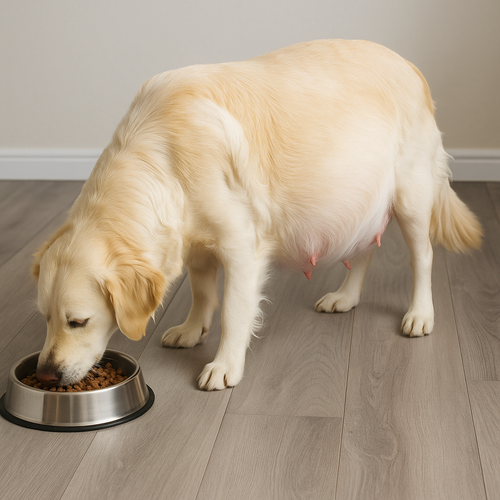
Two cautions printed on the Active Hip & Joint Chews tub, which tend not to make it into blog posts about supplements: safe use in pregnant animals or animals intended for breeding has not been established, and caution is advised in dogs with hyperthyroid disease. If either applies to your dog, ask your vet before you order.
What we will not tell you is that it will change your dog. We have just quoted a meta-analysis saying the evidence for our own two headline ingredients is poor, and it would be strange to then oversell the tub. It is a reasonably dosed, honestly labelled complementary feed at 10.8p a chew, to sit alongside the things that actually move the needle — weight, sensible exercise, and your vet's plan.
Calmdogs® Active Hip & Joint Chews are a complementary feed, not a veterinary medicine. They do not diagnose, treat, cure or prevent disease or joint conditions. If you have any concern about your dog's mobility, comfort or soundness, speak to your vet.
Last bark
We walk a cocker spaniel called Figo around Oxfordshire in most weathers, so the difference between a dog who is tired after a long muddy walk and a dog who is genuinely not right is not an abstract question here. Age changes how a dog moves. So do a dozen things that are not age.
Glucosamine, chondroitin and MSM are nutritional support for normal joint function, fed alongside everything else. Keep your dog lean, keep them moving within their limits, get anything sudden or one-sided looked at properly, and treat a supplement as the last thing on that list rather than the first.
And when it comes to choosing between the joint supplements on the market, the label is where the differences actually show up — named actives with milligram amounts, dosing banded by weight, sourcing declared, and a company describing the product honestly.
Frequently Asked Questions
Here are some common questions customers may have about this topic.
What do glucosamine, chondroitin and MSM actually do for dogs?
Glucosamine is an amino sugar the body uses to build the compounds that give cartilage its structure. Chondroitin sulphate is one of those compounds and contributes to cartilage retaining water and resisting compression. MSM is an organosulphur compound included as a dietary source of sulphur, a component of connective tissue. In a supplement they are fed as nutritional support for normal joint function rather than as treatments for joint disease.
How strong is the evidence for glucosamine and chondroitin in dogs?
Weaker than most packaging suggests. A 2022 systematic review and meta-analysis in the International Journal of Molecular Sciences, covering 72 trials in dogs and cats, reported a very marked non-effect of chondroitin-glucosamine nutraceuticals and concluded they should no longer be recommended for pain management in osteoarthritis. The same analysis found clear analgesic efficacy for omega-3-enriched diets. That review assessed pain relief in diagnosed osteoarthritis, which is not a claim a complementary feed makes, and it did not assess MSM at all, so it says nothing about that ingredient either way.
Where does the glucosamine and chondroitin in dog supplements come from?
Glucosamine is usually derived from shellfish, which matters if your dog has a known shellfish sensitivity. Chondroitin is animal-derived, commonly from bovine, shark or porcine sources. In Calmdogs Active Hip and Joint Chews the glucosamine is shellfish-derived and the chondroitin is porcine. Few brands state this clearly, so it is worth asking before you buy if either is a consideration for your household.
How long does a joint supplement take to make a difference in a dog?
Feeding guides in this category typically suggest allowing several weeks rather than days, so plan on around six to eight weeks before forming a view. Bear in mind that a dog's mobility varies with weather, activity and the previous day's exertion, and that changing food, exercise and supplements at the same time makes it impossible to tell what did what.
Can a joint supplement treat arthritis in a dog?
No. Arthritis is a veterinary diagnosis that needs veterinary management, and a complementary feed is food rather than medicine. A supplement also cannot reverse joint damage that has already occurred. Limping, yelping, holding a leg up or a sudden change in soundness should be assessed by a vet, because several orthopaedic problems look like a dog simply slowing down until someone examines them.