Skip to content


You train a deaf dog the same way you train any dog, with rewards, patience and short sessions. The difference is the language: hand signals and facial expressions take the place of words, a visual "yes" takes the place of the clicker, and a light touch, a floor tap or a vibration cue takes the place of calling their name. Get those three pieces in place and most of the usual training follows.
One honest note before we start: this guide is not built on our own deaf-dog stories. It draws on advice from Battersea, Dogs Trust, the Royal Kennel Club and qualified trainers and vets, with links so you can read each source yourself. Where our collars come in, we say what they do and where they fall short.

Can you train a deaf dog?
Yes. Battersea explains that deaf dogs learn to respond to our gestures rather than our voice, and Dogs Trust says we need to use hand signals and facial expressions to communicate with them. Sit, down, stay, come and loose-lead walking are all teachable.
What changes is that your dog has to be looking at you to "hear" you. So the first job is not sit or stay. It is teaching your dog that checking in with you pays off.
How do I get a deaf dog's attention?
Start by rewarding every glance. Both the AKC and SPCA New Zealand suggest rewarding your dog whenever they look at you on their own. A dog that checks in often is a dog you can talk to.
For the moments when they are not looking, these are the attention cues the charities describe:
| Cue | Where it works | Watch out for |
|---|---|---|
| Step into their eye line | Anywhere, the simplest option | Needs you to move to where they can see you |
| Light stomp or floor tap | Indoors | Keep it light; the aim is a feeling, not a fright |
| Flick a light on and off | Indoors | Never shine a torch straight into their eyes |
| Gentle touch on the shoulder | Close up | Unexpected touch can startle a deaf dog |
| Gently move the lead, or throw a ball across their line of sight | Outdoors, on a long lead | Only works while they are on the lead or can see the ball |
| Vibration collar cue | At a distance, once conditioned | Some dogs find vibration unpleasant (see below) |
Sources: Battersea (eye line, stomp, light, shoulder touch, lead and ball), Dogs Trust (light not in the eyes), and the vibration notes further down.
What do I use instead of a clicker for a deaf dog?
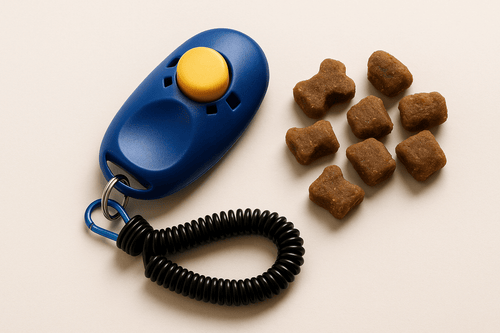
A visual marker. A clicker or a spoken "yes" tells a hearing dog "that's it, a treat is coming". A deaf dog needs the same message in a form they can see.
- Thumbs-up: suggested by the AKC, by VCA's veterinary behaviour team and by SPCA New Zealand.
- An "O" made with thumb and index finger: the "good dog" sign Battersea uses.
- A brief torch flash: another option SPCA New Zealand lists.
Whichever you choose, charge it up first. Show the thumbs-up, then give a treat straight away, and repeat until your dog brightens the moment they see it. Only then start using it to mark sit, down and the rest.
Which hand signals should I teach a deaf dog first?
There is no official set. The AKC notes that some owners use American Sign Language, some use traditional obedience gestures and some make up their own. What matters is that each signal is clear, different from the others, and used the same way every time by everyone in the house.

A sensible starting list:
- Attention / look at me (for example, pointing to your own eyes)
- Good dog (your marker)
- Sit
- Down
- Come (for example, a big, sweeping arm movement)
- Stay or wait (for example, a flat palm)
- Finished (so your dog knows the session is over)
Write your signs down and stick the list on the fridge. It is far easier to stay consistent when the whole family is working from the same page.
How do I use a vibration collar with a deaf dog?
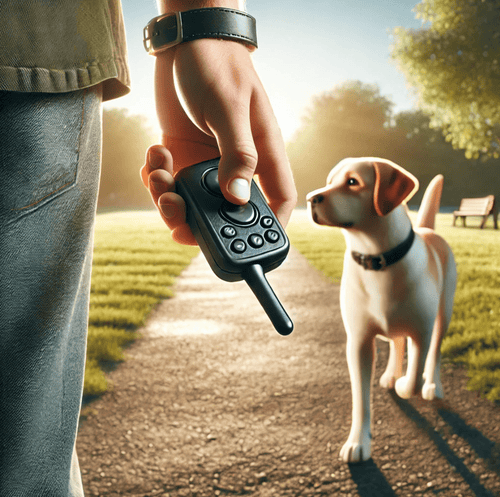
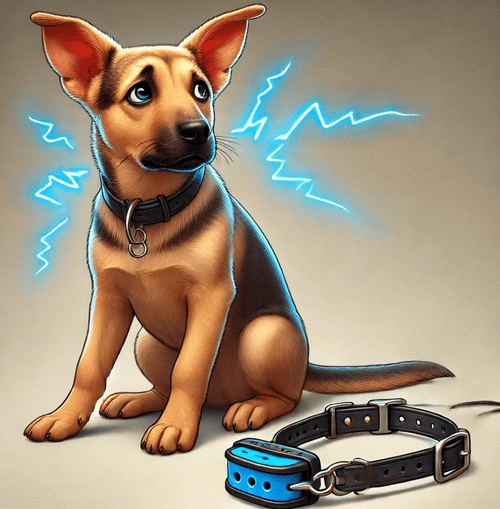
As a "look at me" signal, never as a correction. Certified behaviour consultant Pat Miller, writing in Whole Dog Journal, sees the main benefit of a vibration collar as an attention-getter for a hearing-impaired dog, and says it should be used as a cue, not a consequence.
It is not right for every dog. Miller notes that some dogs find vibration aversive, and the vets writing for VCA warn that many dogs find the vibration aversive and can become frightened. They say it is almost always better to keep a deaf dog fenced in or on a long line. So treat the collar as an option to test gently, not a must-have.

If you decide to try one, introduce it slowly:
- Treats first, no vibration. Pat Miller's introduction began with treats and no vibration, then treats while the collar vibrated near the dog, then treats while it was held against the dog's neck.
- Find the lowest level they notice. Start at the bottom setting and go up a step at a time. You are looking for ears perking or a turn of the head, never a startle.
- Vibration, then treat. Press, then reward straight away, every time. Repeat over several short sessions until your dog turns to you expecting food.
- Add your signal. Vibration means "look at me". Once they look, give the hand signal for what you want, then mark and reward.
- Watch your dog, not the remote. If they seem uneasy or worried by the vibration, stop, go back a step, or drop the collar altogether.
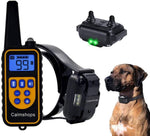
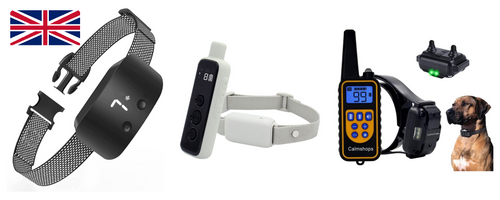
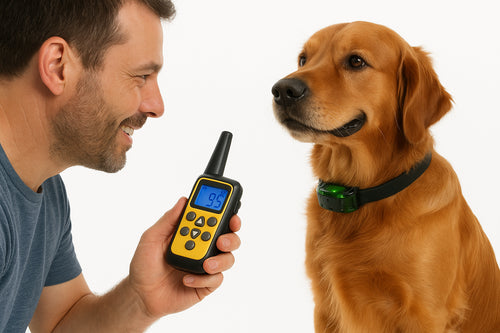
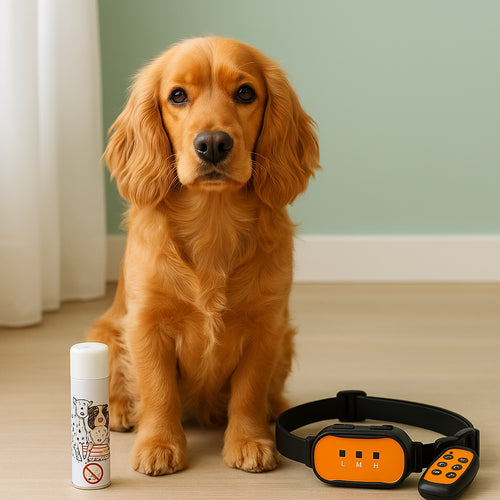
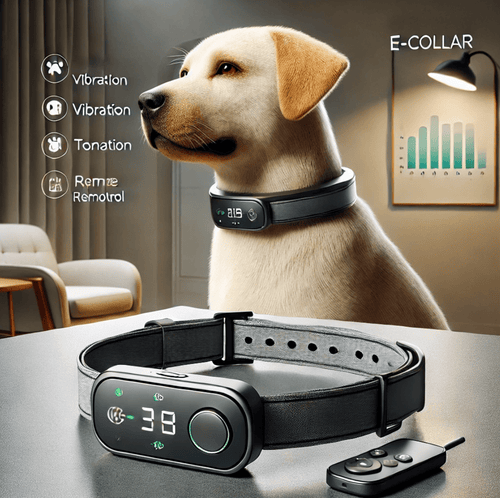
Two of our no-shock collars have a vibration mode suited to this kind of work. The Vibrating Dog Training Collar has beep, light and vibration adjustable from 0 to 99, an IPX7 receiver, and comes as a one-, two- or three-dog set on one remote. The Wireless Vibration Dog Training Collar has tone and eight vibration levels, a remote range of up to 300 metres, and works with up to two dogs. Both product pages say to start at the lowest vibration level and work up gradually, the first page says to always pair vibration cues with rewards, and both say not to use the collar for more than 12 hours at a stretch.
One trade-off to be clear about: the beep and tone modes are sound cues, so they will not reach a fully deaf dog. For a deaf dog, vibration is the mode that matters. If your dog still has some hearing, the tone may be worth testing too.
If you are weighing up whether a vibration collar is kind at all, we have looked at that question on its own in are vibrating dog collars cruel?
Can a deaf dog go off lead?
Only in a fully secure, enclosed area. Battersea generally recommends keeping deaf dogs on a long lead unless the area is completely secure, Dogs Trust advises keeping your dog on a lead in public, and VCA's vets say never to let a deaf dog off lead in an unfenced, open area. A vibration collar does not change that. It can help you get a look back, but it cannot call your dog out of a road.
A few things make walks easier:
- A long line gives your dog room to sniff and explore while you stay connected. Gently moving the line is itself an attention cue.
- Stay visible. Battersea points out that a deaf dog needs to be able to see you to respond to recall, so practise in places where your dog can keep you in view.
- Light them up after dark. Our LED light-up collar has solid and two flashing modes and lasts up to about 10 hours a charge. It will not help your dog hear you, but it does help you keep an eye on them at dusk.
- Keep your hands free for signals. The hands-free reflective lead clips to an adjustable waist belt with a waist bag, which leaves both hands for signing and rewarding.
For step-by-step recall work, our vibrating collar recall guide walks through it. With a deaf dog, swap every spoken cue for your hand signal.
How do I wake or touch a deaf dog without startling them?
Gently, and from where they can sense you. Dogs Trust points out that deaf dogs will startle if touched unexpectedly and suggests avoiding disturbing them when they are asleep. When you do need to wake them, the AKC suggests placing your hand in front of their nose so they wake to your smell. Battersea suggests the shoulder as a good place for a light touch, and SPCA New Zealand adds a tap on the floor nearby or a wave in their line of sight.
It is worth teaching a "touch means something nice" game too: a soft shoulder touch, then a treat. It helps turn touch into something your dog looks forward to rather than something that makes them jump.
How do I know if my dog is deaf?
If you notice your dog no longer reacting to sounds they used to, talk to your vet first so they can look for a cause.
For puppies, the Royal Kennel Club explains that the BAER (Brainstem Auditory Evoked Response) test checks a dog's hearing, and that a litter is ideally tested at around 5½ to 6½ weeks, although the test can be done at any age after that, including on adult dogs. It picks up dogs deaf in one ear as well as both. Congenital deafness is recognised in many breeds with mostly white coats, such as Dalmatians, white Boxers and white Bull Terriers, and is linked to the merle gene in breeds such as Australian Shepherds and Border Collies. It can also turn up in dogs with other coat colours.
Last bark
Training a deaf dog is mostly about swapping sounds for things your dog can see and feel: a marker they can see, signals that never change, a gentle way to get their attention, and a long line until you are somewhere fully enclosed. A vibration collar can be one part of that for some dogs, introduced slowly and always paired with a reward. For others, a long line and a well-practised check-in are all you need.
Frequently asked questions
Can a deaf dog be trained?
Yes. A deaf dog learns the same things a hearing dog does, using hand signals, facial expressions and a visual marker such as a thumbs-up instead of spoken words or a clicker. Battersea and Dogs Trust both describe training deaf dogs this way. Start by rewarding your dog every time they look at you, because a dog has to be watching you to read your signals.
How do you get a deaf dog's attention?
Step into their line of sight, lightly stomp or tap the floor so they feel the vibration, flick a light on and off indoors, or gently touch their shoulder. Outdoors, gently move the long line or throw a ball across their line of sight. Some owners also use a vibration collar as a look-at-me cue, introduced slowly and always paired with a treat.
Is a vibration collar a good idea for a deaf dog?
It can be for some dogs, used only as an attention cue and never as a correction. Introduce it at the lowest level, pair every vibration with a treat, and stop if your dog seems uneasy. Some dogs find vibration unpleasant, so a long line and a strong habit of checking in with you may suit your dog better.
What can I use instead of a clicker for a deaf dog?
Use a visual marker. A thumbs-up is the most common choice, Battersea uses an O shape made with thumb and index finger, and a brief torch flash is another option. Show the marker and give a treat straight away, many times over, until your dog lights up when they see it. Then use it to mark the exact moment your dog gets something right.
Can a deaf dog be let off the lead?
Only in a fully secure, enclosed area. Battersea generally recommends a long lead for deaf dogs unless the area is completely secure, because your dog cannot hear you call and needs to see you to respond to recall. A vibration collar does not change this. A long line lets your dog sniff and explore while you stay connected.
How do I wake a deaf dog without scaring them?
Avoid disturbing them when you can. When you do need to wake them, place your hand in front of their nose so they wake to your smell, or tap the floor nearby. If you touch them, use a light touch on the shoulder. Pairing a gentle touch with a treat helps your dog learn that being touched is a good thing.