Ir directamente al contenido


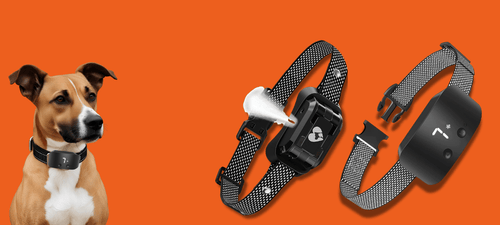
Both collars do the same core thing: they interrupt a bark with a short burst of citronella mist. The difference is who decides when that happens. An automatic collar decides for itself, which means it works when you are not there. A remote-controlled collar waits for you to press a button, which means it does nothing while you are out.
That is the whole choice, and almost nobody explains it. What follows is how these collars actually work, what each type is genuinely good at, and — more usefully — what each one cannot do.
How a citronella collar works

A small canister sits on the collar with its nozzle pointed towards your dog's muzzle. When it fires, it releases a brief puff of lemon-scented mist. Most dogs find the smell surprising rather than unpleasant, and the surprise is the point: it breaks the bark mid-flow, which gives you a gap to redirect into something else and reward the quiet.
It is an interruption, not a punishment, and the distinction matters more than it sounds. An interrupted dog can be redirected. A punished dog learns to be wary of you, which is the opposite of useful.
Why spray rather than shock
We do not sell shock collars and we are not going to. A citronella collar startles; a shock collar hurts. The first gives you a moment to work with, the second teaches a dog that the world is unpredictable and painful, and dogs handled that way frequently get worse rather than better — more anxious, more reactive, and often barking more.
None of which makes a spray collar a soft option to leave running all day. It is a training aid with a job and a time limit, and the rest of this piece is largely about its limits.
The automatic collar: it works without you
An automatic collar has a sensor that detects the bark itself — sound and throat vibration together — and fires on its own. You set a sensitivity level, fit it, and it runs.
What it is genuinely good for: barking that happens when you are not in the room. The postman at eleven while you are on a call upstairs. Next door's dog setting yours off while you are at work. The doorbell when you are asleep. In every one of those, a remote in your pocket is no use, because you are not holding it and not watching.
Where it falls down. Three things, and they are real:
- False triggers. A slammed door, a lorry, another dog barking through the fence — any of these can set it off on a higher sensitivity setting. Start on the lowest setting and work up only if you need to. That single habit removes most of the problem, and most people do the opposite.
- Deep-voiced dogs. The sensor is calibrated for higher-pitched barking, which is most common in small and medium breeds. A large dog with a deep bark may not set it off reliably. If that is your dog, ask before you order rather than after.
- It is spray only. No tone, no vibration. If your dog turns out to be one of the ones who tunes the spray out, you have no other setting to fall back on.
Practically, it also runs a long time between charges — up to 60 days — which matters, because a collar meant to be working quietly in the background is no good if it needs plugging in every few days.
You can read the full detail on the automatic collar's product page.
The remote collar: you decide, and it is not just spray

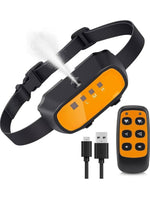
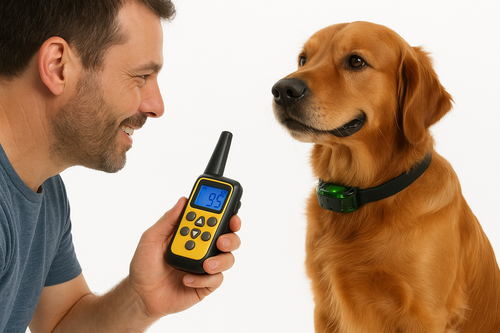
The first thing to correct, because the old listings got it wrong: the remote collar is not a spray collar with a button on it. It has three modes.
- Tone. A single beep. Start here — a fair number of dogs are sound-sensitive enough that you never need anything else.
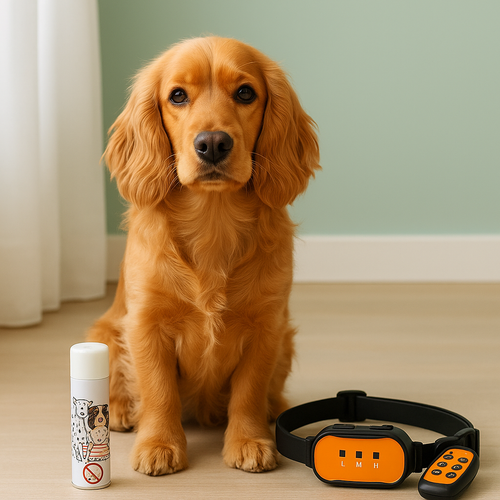
- Vibration, eight levels. The bottom level is genuinely light. Use the lowest one that actually registers rather than jumping up the scale. Figo, our cocker spaniel, ignored the tone entirely — looked up, noted it, carried on — and vibration was what got through.
- Citronella spray, two intensities. The lower intensity is enough for most situations. The higher one exists for dogs who have worked out the lower one.
What it is genuinely good for: training you are present for. Recall. Lead reactivity. And the one most owners miss — pre-empting rather than reacting. If your dog erupts every time someone knocks, pressing vibration the moment you hear the knock interrupts the anticipation instead of the bark that has already started. That tends to work faster than correcting after the fact.
Where it falls down. It does nothing while you are out. That is not a minor caveat — if the barking you actually want to stop happens while the house is empty, a remote collar cannot help you, however good it is. It also has a shorter battery life, around ten days, and the remote itself is not waterproof even though the collar is.
Full detail on the remote collar's product page.
So which one
Answer one question honestly: when does the barking you want to stop actually happen?
If the honest answer includes "when I'm not there", you want the automatic. If it is all things you witness — the lead, the door, the park — you want the remote, and you get two extra modes with it. If it is genuinely both, the automatic is the safer single purchase, because you can always be present for training but you cannot always be present for the barking.
Both come in bundles alongside the calming products, and if you are weighing up which bundle makes sense for your situation, that is a separate piece.
The refill, and why it is in the box

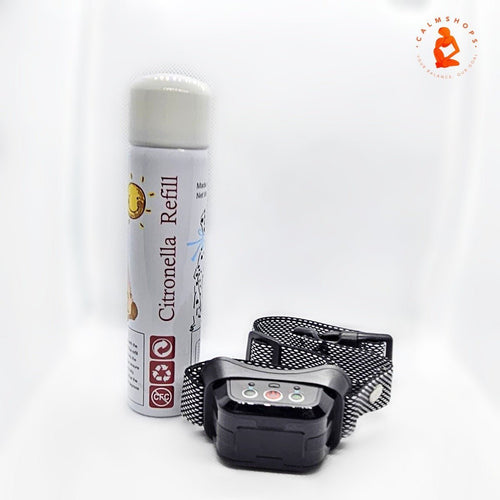
Worth being plain about this, because the old bundle pages were not: both collars already ship with a can of citronella. The refill included in each bundle is a spare. It is not the first one, and you are not being sold something you already have.
It matters because of how these collars fail. When the can runs low the collar keeps triggering, but the spray weakens or stops — so it looks like it is working and it is not, and you may not notice for days. A spare in the drawer is the difference between swapping it that evening and losing a fortnight of consistency waiting for a delivery.
Check the level every few days while you are actively using it.
What a collar cannot fix
This is the section to read properly if any of it applies to you.
Barking from distress at being left alone is not a training problem, and no collar in this range is the answer to it. If your dog barks, howls, paces, drools, scratches at doors or destroys things specifically when left — and is fine when you are home — that is separation-related distress. It is a welfare problem, it needs a proper behavioural plan from your vet or a qualified behaviourist, and putting a spray collar on a dog who is already panicking adds something unpleasant to a situation they cannot escape. It can make things worse. Please do not.
There is a distinction worth drawing here, because it gets blurred. A dog who barks at things while alone — the postman, next door's dog, someone walking past the window — is reacting to triggers that happen to occur when you are out. That is a trigger problem, and an automatic collar is a reasonable part of addressing it. A dog who barks because they are alone is a different dog with a different problem. If you are not sure which one you have, a camera on your phone for an afternoon will usually tell you: trigger barking starts and stops with events, distress barking starts when you leave and does not settle.
A collar also will not fix a dog who is bored, under-exercised, or rehearsing the same window-barking routine four times a day. It does not do anything about why your dog is barking in the first place, and if you have not worked that out yet, that is the more useful place to start.
And it is not a substitute for training. Used on its own, inconsistently, alongside shouting the rest of the time, it teaches a dog very little. Used deliberately, in short supervised periods, alongside teaching an alternative behaviour, it can be a genuinely useful tool. Keep continuous wear under 12 hours either way.
Where the calming products fit
This is the actual argument for buying a bundle rather than a collar on its own, and it is worth understanding rather than taking on trust.
A collar works on the behaviour. The calming products work on the state underneath it. The collar interrupts the bark in the moment. It does nothing about a dog who is generally wound up, poor at settling, and primed to go off at the next thing. If that describes your dog, interrupting each individual bark is treating symptoms one at a time.
Calmdogs® Dog Calming Treats are a complementary feed — food, not medicine — with chamomile, valerian root, passionflower, L-tryptophan, L-theanine, ashwagandha, ginger and magnesium. We have written at length elsewhere about what the calming chews do and do not do, and about reading a calming chew label, and we would rather you read that than take our word for it here. The short version is that responses vary a great deal between individual dogs.
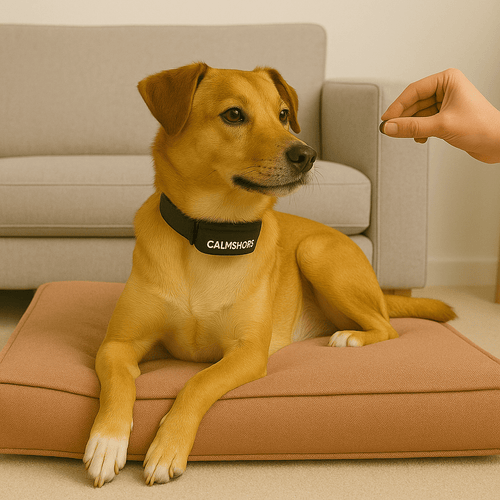
The calming collar included in two of the three bundles is worn continuously rather than used in the moment. We are not going to tell you how it works, because its own packaging and product page do not state what is in it — and we are not prepared to invent a mechanism for something we cannot describe accurately. If that matters to you, the Anti-Bark bundle is the one without it.
Calmdogs® Dog Calming Treats are a complementary feed, not a veterinary medicine. They are not intended to treat, cure or prevent any condition. Individual dogs respond differently. If your dog is showing ongoing signs of distress, speak to your vet or a qualified behaviour professional before buying equipment.
Last bark
Automatic if the barking happens without you there. Remote if you are present for it and want tone and vibration as well as spray. Lowest sensitivity first, either way. Keep the spare can where you can find it, keep wear under 12 hours, and treat the collar as one part of a routine rather than the routine itself.
And if the barking only happens when your dog is left alone and distressed about it, put the catalogue down and ring a behaviourist. That is not us being cautious. It is the one situation where buying any of this would be the wrong thing to do.
Frequently Asked Questions
Here are some common questions customers may have about this topic.
What is the difference between an automatic and a remote-controlled citronella collar?
An automatic collar detects the bark itself and fires without any input from you, so it works when you are not in the room or not at home. A remote-controlled collar fires only when you press the button, so it does nothing while you are out. The automatic collar is spray only. The remote collar also offers tone and eight levels of vibration alongside two spray intensities.
Do citronella spray collars hurt a dog?
There is no shock involved. The collar releases a short burst of lemon-scented mist that most dogs find surprising rather than painful, and the intention is to interrupt the bark so you can redirect and reward quiet behaviour. It is still a training aid with limits rather than something to leave running all day, so keep continuous wear under 12 hours and use it during periods you can supervise.
Why does my collar fire when my dog has not barked?
False triggers usually come from a sensitivity setting that is too high. A slammed door, passing traffic or another dog barking nearby can all set an automatic collar off. Start on the lowest sensitivity and increase only if the collar is genuinely missing your dog's bark. Nozzle position and sensitivity are the two most common reasons a collar seems to behave inconsistently.
Do I need a citronella refill if the collar already comes with one?
Both collars ship with a can of citronella included, so a refill is a spare rather than the first one. It is worth having because of how these collars fail: when the can runs low the collar keeps triggering but the spray weakens or stops, which is easy to miss for days. Having a spare means swapping it the same evening rather than losing consistency while you wait for a delivery.
Will a spray collar help a dog that barks when left alone?
It depends entirely on why the dog is barking. A dog reacting to specific triggers that happen while you are out, such as the postman or a neighbouring dog, is a trigger problem that an automatic collar can form part of addressing. A dog barking, howling, pacing or destroying things because it is distressed at being left is a welfare problem, and a spray collar is the wrong tool for it. That needs a plan from your vet or a qualified behaviourist rather than equipment.